
Energy Efficiency
Sunphade blocks up to 66% of the sun's energy, reducing heat buildup and lowering the need for artificial cooling, cutting energy costs while keeping indoor spaces bright and comfortable.

Cost Savings
With minimal maintenance, no large mechanical or electric components to maintain, and fewer replacements, Sunphade cuts lifetime costs by 90% compared to blinds and screens—saving money and increasing property value.

Low Carbon Footprint
Life Cycle Assessment (LCA) shows Sunphade reduces carbon emissions by 90% by decreasing energy consumption and reliance on artificial cooling, actively supporting sustainability goals.

Aesthetic Freedom
Sunphade blends seamlessly with any facade, no structural changes, no lengthy permit processes. Just effective solar control that preserves the building’s original design.

Weather Adaptability
Designed for outdoor use, Sunphade technology has been tested from -30°C to 85°C, ensuring long-term performance in any climate.


Color Neutral
Sunphade maintains the true color of daylight while reducing heat, creating a comfortable indoor climate that works with your natural rhythm. No tints, no shifts—just clear views and balanced light.
Frequently Asked Questions

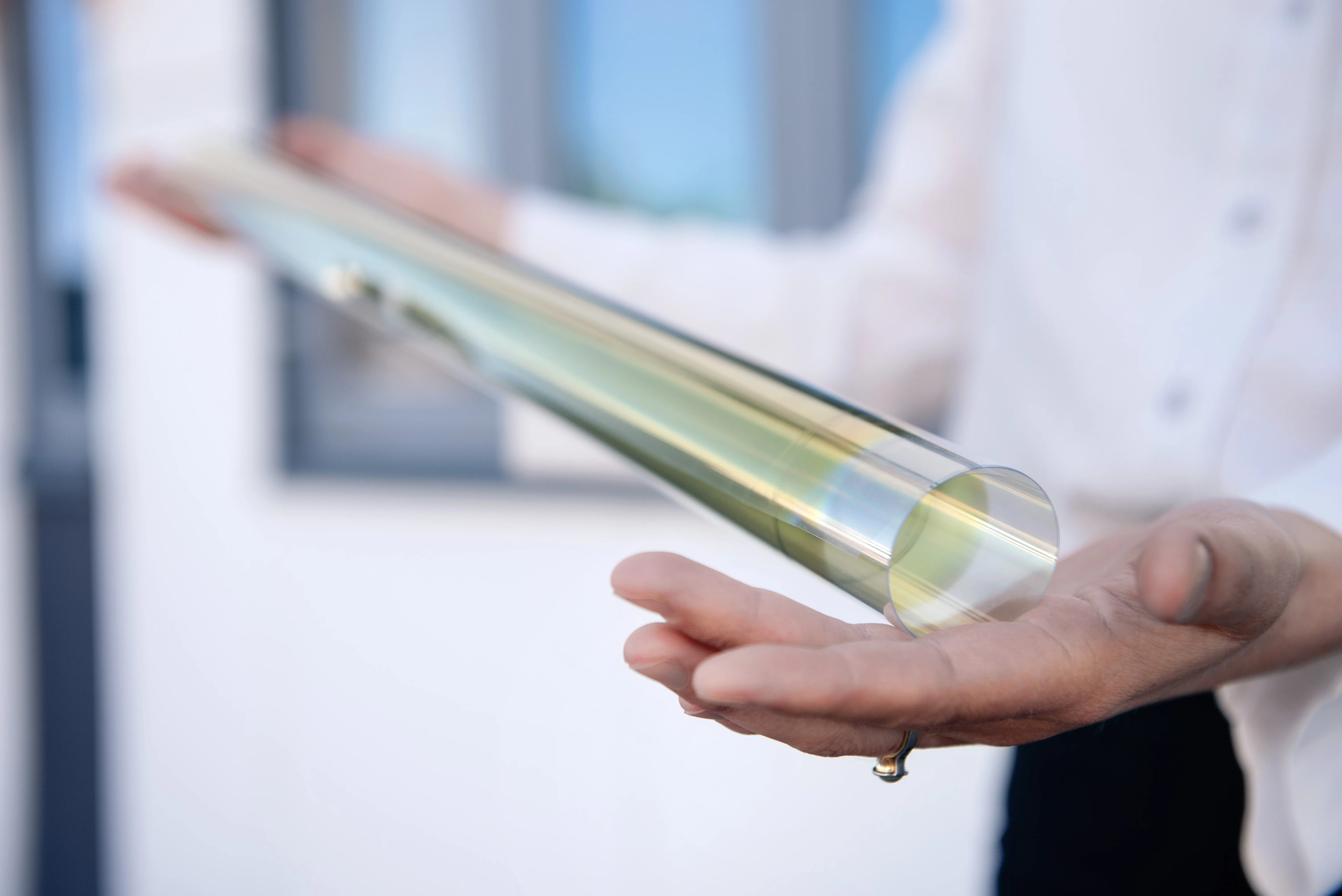
Sunphade can be installed on all types of glass windows. The film is installed by professional technicians and custom-fitted to each window. It is sealed along the edges to support durability and long-term performance.
Our installer network provides a smooth and reliable installation from start to finish.
The technology has been developed in Norway through research at IFE (Institute for Energy Technology at Kjeller). Sunphade was founded in 2018 to commercialize the technology.
The technology is patented.
Sunphade blocks up to 66% of solar energy, significantly reducing heat entering the building.
In real installations, reductions of more than 3°C in indoor temperature have been observed on hot days, without the use of traditional shading systems like blinds or screens.
The exact impact varies by project and depends on factors such as:
• Amount of glass in the façade
• Orientation (north, south, east, west)
• Geographical location and climate
• Window quality and glazing type
• Building design and how heat accumulates
• Existing cooling and ventilation systems
Across different projects, Sunphade enables improved comfort and reduced cooling demand, supporting improved energy efficiency and user satisfaction.
Sunphade’s photochromic technology is triggered by sunlight intensity, enabling a self-adaptive approach to solar control without the need for mechanics, wiring, sensors, or electricity.
Unlike static window films with a fixed tint, which can appear either too clear or too dark depending on conditions, Sunphade continuously adapts to the level of solar exposure.
When sunlight intensity is lower, such as during winter or periods of low solar exposure, the film remains clearer, allowing more natural daylight and beneficial solar heat to enter the building.
When sunlight intensity increases, the film darkens further, reducing incoming light, glare, and solar heat.
This adaptive behavior supports improved comfort and energy performance while maintaining clear views and daylight.
In addition, Sunphade blocks more than 99% of UV radiation in both its clear and dark states.
This helps reduce UV-related fading of interior furnishings and artwork, while also limiting UV exposure to skin and hair.
Sunphade’s photochromic effect is based on an inorganic nanomaterial that does not degrade from UV exposure, supporting long-term material stability.
In practical use, the durability of window films is influenced by the PET film (Polyethylene Terephthalate), the adhesive, and external factors such as climate, orientation, exposure, and maintenance.
Within the solar control film industry, high-quality films installed on vertical windows are commonly used for many years, often in the range of 10–15 years, depending on conditions. Sunphade is designed and applied in line with these industry practices while offering advanced functionality.
Product performance and durability depend on installation conditions, environmental exposure, and usage. For guidance on care and maintenance please refer to FAQ 6.
The following care and maintenance guidelines are intended to help preserve the appearance and performance of the window film over time. Actual durability may vary depending on environmental conditions and exposure.
Dry-out period after installation
After installation, the film requires a drying period while residual moisture evaporates. This may take longer in cold weather and shorter in warm conditions. During this time, small water bubbles or a slight haze may be visible and will disappear naturally.
Do not clean the film for 30 days after installation.
Cleaning recommendations
Proper care helps maintain appearance and performance over time:
* Use clean, soft cloths or non-abrasive sponges
* Most standard glass cleaners are suitable; a mild soap-and-water solution also works well
* Dry using a soft cloth or rubber squeegee
* Avoid abrasive tools, brushes, or rough paper towels
* Use separate cleaning materials for interior and exterior glass surfaces
Proper care can help maintain clarity and appearance over time, but long-term performance will always depend on environmental exposure and site-specific conditions.
For now, we only supply to corporate customers.
If you are a residential customer, get in touch with us with your needs and we will keep you posted if we cater to the residential market in the future.